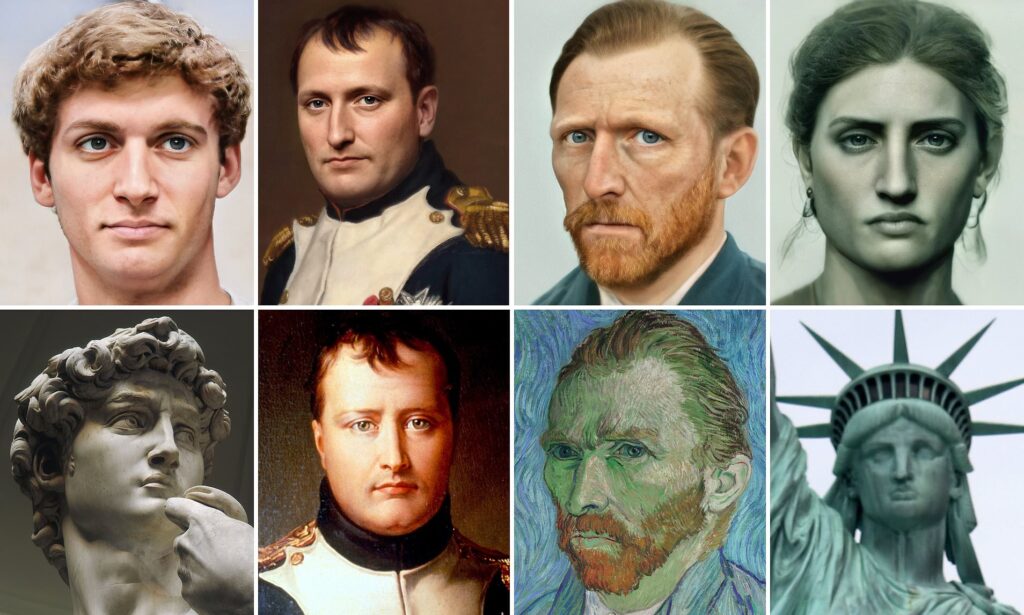
Artificial Intelligence (AI), originally conceived for automating tasks, now profoundly influences numerous sectors, including medicine, education, and finance. This powerful technology has even extended its reach into the creative domains of art and sculpture. By harnessing sophisticated algorithms for predictive analysis, AI is enabling artists to reinterpret historical figures, crafting hyper-realistic facial representations for ancient statues and portraits.
At the forefront of this innovative artistic movement are two distinguished creators: Bas Uterwijk, a Dutch photographer and designer, and Dan Voshart, a VR specialist known for his work in the film industry. These artists are widely acclaimed for their pioneering efforts in digitally “rejuvenating” ancient faces. They achieve this by employing advanced AI and Machine Learning software to predict and visualize the likely appearance of historical figures. Bas Uterwijk’s remarkable depiction of Jesus, the Christian deity, notably received widespread recognition, showcasing the incredible potential of this AI-driven art.
Recreating Ancient Faces with AI: Techniques and Tools
When detailing their process for crafting these realistic historical portraits, the artists emphasize a methodology centered on collecting comprehensive data about each figure. This research extends beyond just physical attributes, incorporating geographical and temporal details like their place of origin, historical era, and cultural background. This extensive and varied information is then carefully inputted into a specialized AI software known as ‘ArtBreeder’. This advanced tool allows them to bring ancient paintings and statues to life with astonishing realism. Notable examples of their compelling work include ultra-realistic facial renditions of iconic historical personalities such as Alexander the Great, George Washington (the first U.S. President), the renowned Statue of Liberty, and even Michelangelo’s David.
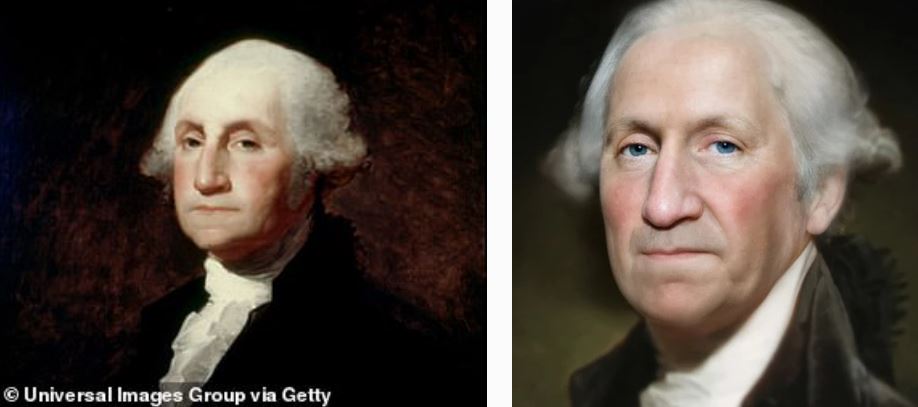
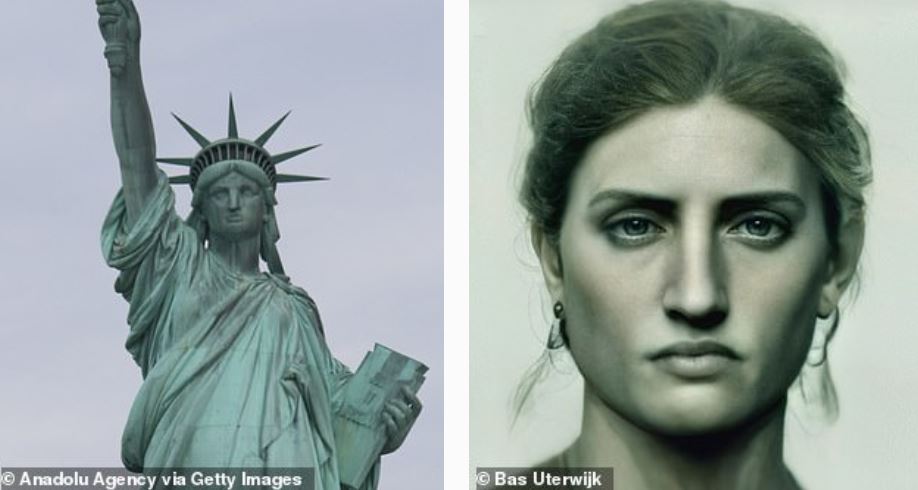
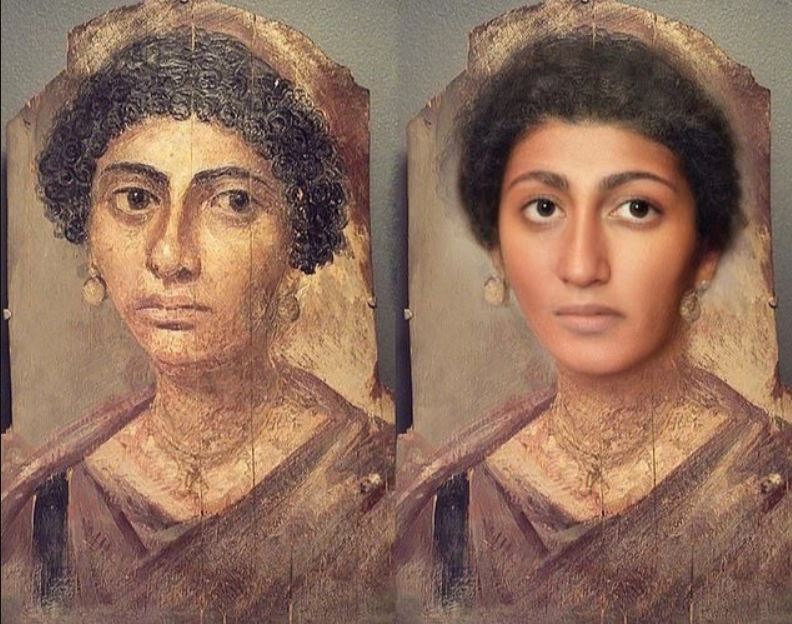
Bas Uterwijk’s AI Art: Exploring His Notable Creations
Bas Uterwijk has extensively shared his remarkable work in digitally recreating ancient historical figures across both his Instagram presence and official website. His compelling portfolio currently boasts between 50 and 60 meticulously rendered images of these prominent historical personalities.
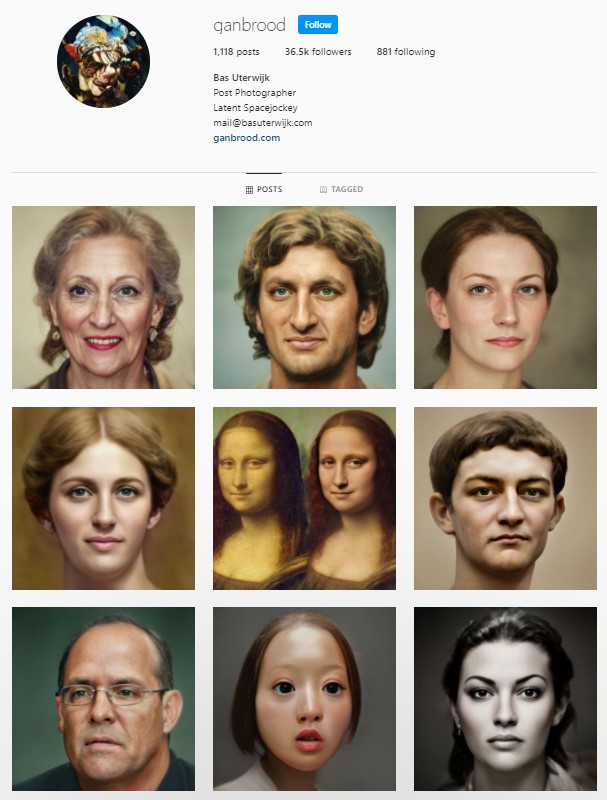
Among the many ancient figures captivating audiences on his profile, the Christian deity Jesus holds a prominent place. Uterwijk has painstakingly recreated this revered personality, aiming for a more historically plausible human facial representation. In the intricate process of rendering this iconic figure, Uterwijk incorporated all available historical data. This encompassed diverse references from statues and paintings, historical records indicating his birth in Bethlehem (around 10 km from Jerusalem), and biblical narratives suggesting he did not physically distinguish himself from the general population of his time.
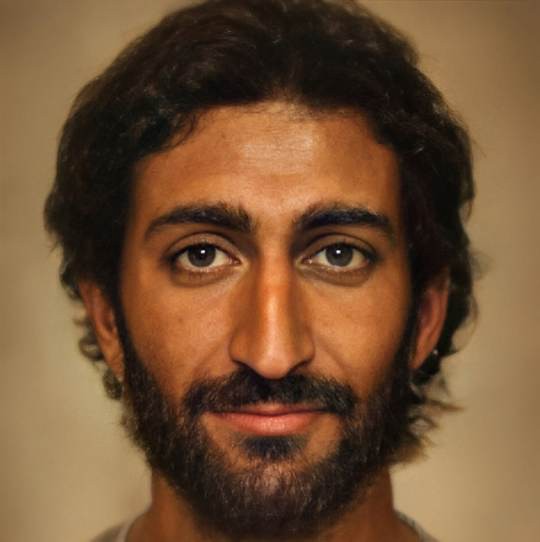
Considering Jerusalem’s geographical position in the Middle East, it’s logical to deduce that an individual who seamlessly blended with the general populace would exhibit physical traits common to the region’s inhabitants. Accordingly, Uterwijk’s AI software generates a depiction of Jesus featuring darker skin tones and distinct Middle Eastern facial characteristics. This portrayal offers a stark contrast to many contemporary representations, which, often influenced by traditional Roman artistic styles, frequently show him with lighter skin and straight hair.
Dan Voshart’s AI-Generated Roman Emperor Portraits: A Deep Dive
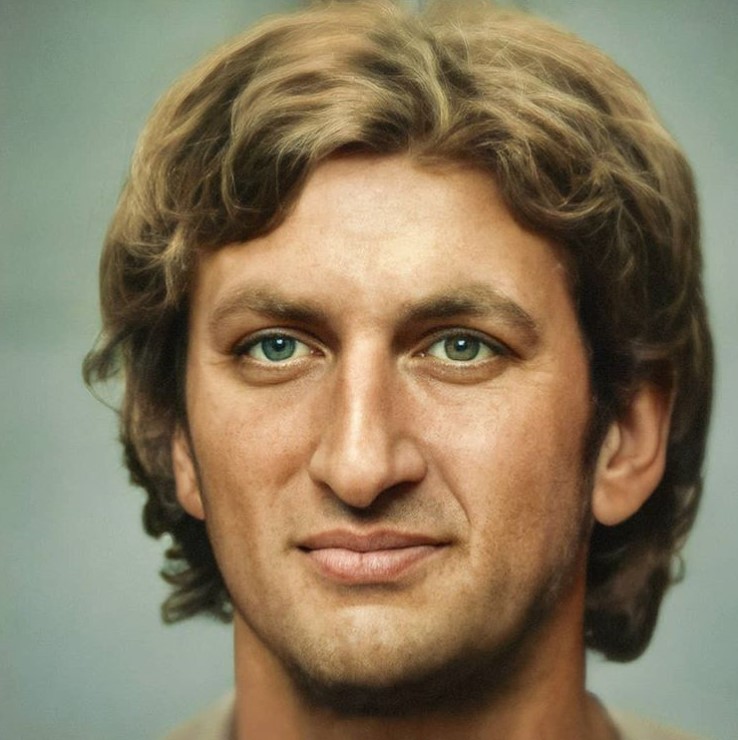
Dan Voshart, another accomplished digital artist and primarily a film VR specialist, leveraged the recent lockdown period to produce remarkably lifelike portraits of ancient Roman Emperors. Voshart confirms his consistent use of ArtBreeder, a robust AI tool that harnesses Generative Adversarial Networks (GANs), a cutting-edge Machine Learning technique, for his historical recreations. He detailed his intricate workflow: “first working in Photoshop, loading it into ArtBreeder, tweaking it, bringing it back to Photoshop, then reworking it.”
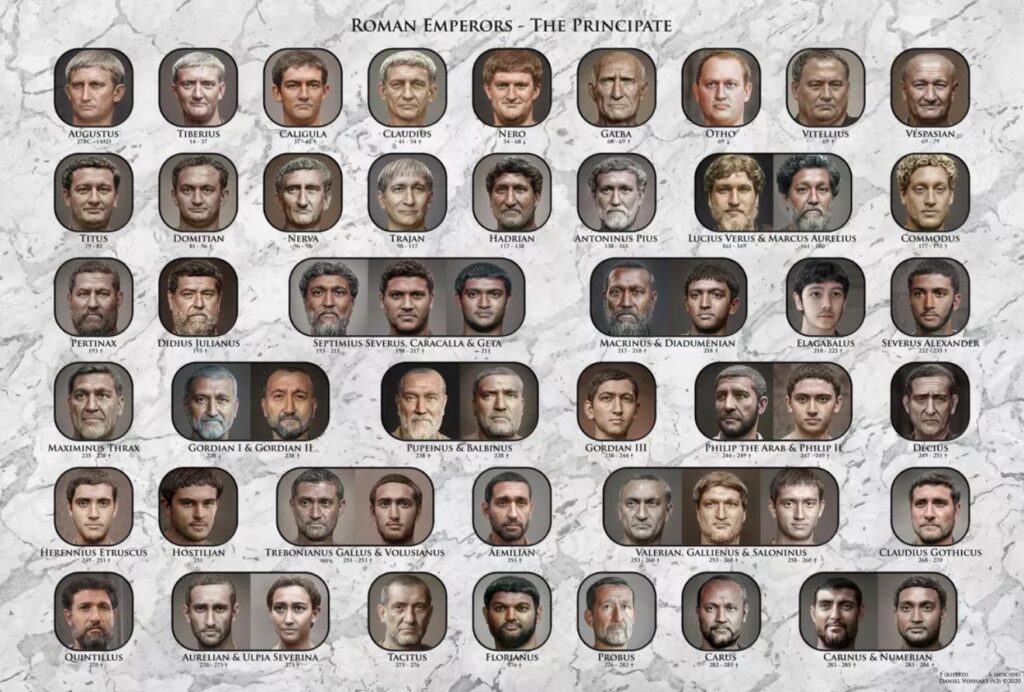
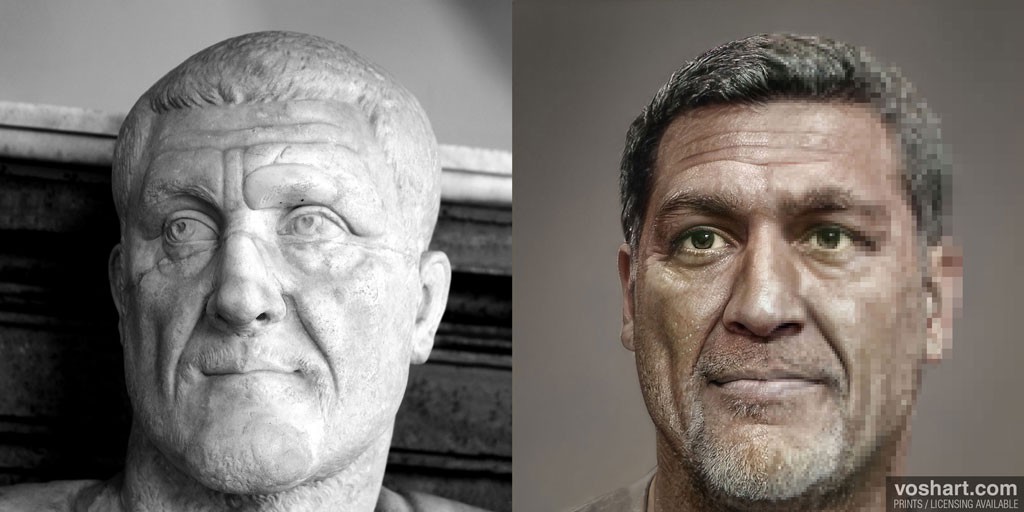
Similar to Uterwijk, Dan Voshart underscores the crucial importance of combining all available historical data and sources with advanced facial recognition techniques. This holistic methodology enables the software to effectively correlate various references, yielding remarkably authentic results. For example, in his depiction of the Roman Emperor Maximinus Thrax, Voshart notably integrated images of the legendary wrestler Andre the Giant. Voshart justified this specific choice by citing historical records that describe Thrax as having experienced a pituitary gland disorder in his early life, leading to a distinctive “lantern jaw” and formidable physique. Given that Andre the Giant shared this same medical condition, Voshart strategically utilized Andre’s unique facial characteristics to refine the jawline and brow in his Maximinus Thrax portrait. He metaphorically describes this entire artistic process as akin to alchemy, emphasizing its dependence on a meticulous fusion of diverse inputs to produce the compelling final artwork.
The Future of AI in Historical Recreations: A Vision
The transformative capabilities of Artificial Intelligence and Machine Learning reach well beyond generating realistic portraits of historical figures. These advanced technologies also facilitate the creation of dynamic animations and graphics, enabling the integration of these recreated historical personalities into video content. This innovation unlocks immense potential for vividly re-enacting the lives of great historical figures with unparalleled realism. Imagine a future where historically accurate docudramas feature digital avatars of ancient figures “performing” their own narratives, signaling a monumental leap forward in the infotainment industry.
References:
- https://medium.com/@DanielAKeane/artist-uses-ai-to-recreate-faces-of-jesus-christ-and-other-famous-figures-3889a6be5219
- https://www.dailymail.co.uk/femail/article-8479591/Artist-uses-artificial-intelligence-reveal-famous-historical-figures-actually-looked-like.html
- https://www.theverge.com/2020/8/21/21395115/roman-emperors-photorealistic-portraits-ai-artbreeder-dan-voshart
- https://www.thesun.co.uk/tech/12013982/artificial-intelligence-artist-famous-figures/
Join our community by subscribing to our Weekly Newsletter to stay updated on the latest AI updates and technologies, including the tips and how-to guides. (Also, follow us on Instagram (@inner_detail) for more updates in your feed).
(For more such interesting informational, technology and innovation stuffs, keep reading The Inner Detail).