

Welcome to the 21st century’s third decade, an era where technological advancement continues at an unprecedented pace. Just as individuals compete, technologies now vie for relevance and dominance in the market. While innovation brings incredible progress, it has also introduced new challenges, particularly concerning trust in financial transactions and digital interactions. Issues like a lack of transparency in markets and networks have led to widespread apprehension among users. However, a groundbreaking solution has emerged to address these concerns: blockchain technology. Often confused with Bitcoin, it’s crucial to understand that Bitcoin is a form of electronic transaction that leverages the underlying blockchain framework.
Technology is a useful servant, but a dangerous master!
Understanding Blockchain Technology: A Core Definition
Blockchain, a technological innovation that gained prominence over the last decade, is fundamentally a distributed, decentralized, and open ledger. In simpler terms, imagine it as a series of interconnected digital blocks, forming a chain. Each block within this chain represents recorded digital information, such as transaction details. What makes this chain robust is that every new block is cryptographically linked to its predecessor using a unique “hash code.” This ensures that no two blocks are identical and maintains the integrity of the data.

To elaborate, each block is designed to store specific digital information. For instance, in a transaction, a block might record details like the username (represented by a digital signature), the date, time, and monetary value of the transaction. Typically, each block can accommodate up to 1MB of data. These blocks are then stored across a distributed database, which is accessible to numerous connected participants, known as “peers.” Over time, as more transactions occur, new blocks are added, updating the historical record. Peers maintain the most current, or “high-scoring,” version of this database, making the system inherently distributed.
Transactions on a blockchain occur directly between two participating peers within a peer-to-peer network, eliminating the need for a central intermediary or third party. This direct interaction is what defines blockchain as “decentralized.” Furthermore, these transactions are made accessible and visible to all participants within the specific blockchain network, which is why it’s referred to as an “open ledger.” This fundamental structure ensures transparency and trust.
Revisiting the core definition, blockchain is indeed a distributed, decentralized, and open ledger. This foundational understanding is key to grasping its revolutionary potential.
I haven’t failed. I have found 10,000 ways that don’t work!
Thomas Alva Edison
How Blockchain Technology Operates
Understanding blockchain’s operation becomes straightforward when explained simply. Consider a scenario where you transfer money to a friend or relative overseas. In a traditional banking system, this transaction involves your bank and the recipient’s bank acting as intermediaries. While generally reliable, this reliance on third parties introduces potential vulnerabilities, such as risks of cyber-attacks, system failures, or significant delays.
Blockchain fundamentally alters this process by replacing the third-party intermediary with a universal, distributed ledger. All participants in this ledger collaboratively authenticate and verify every transaction. Instead of trusting a single centralized system, the trust is distributed among all network participants. This universal ledger is precisely what blockchain is. As previously mentioned, each new transaction results in the creation of a new block, which is then authenticated by all preceding blocks in the chain. This involves communicating the transaction to all nodes in the network. Once validated by these nodes, the new block is added to the chain, and the transaction is successfully executed. The distributed nature of this network makes it virtually impossible for a hacker to tamper with a single block, as they would need to alter every subsequent block across the entire network simultaneously.

To incentivize participation and maintain the integrity of this complex chain – which demands significant time, resources, computing power (for solving cryptographic algorithms), and capital – Satoshi Nakamoto introduced a cryptocurrency in 2008. This cryptocurrency, known as Bitcoin, rewards individuals who contribute to the network by verifying and adding blocks to the Bitcoin blockchain. These contributors are commonly referred to as “miners.”
Is Blockchain Secure? Exploring Its Robust Features
The answer to blockchain’s security is a resounding YES. Its revolutionary nature stems from several inherent features that make it exceptionally robust and secure. Here are some of its key attributes:
1. Distributed Ledger Technology
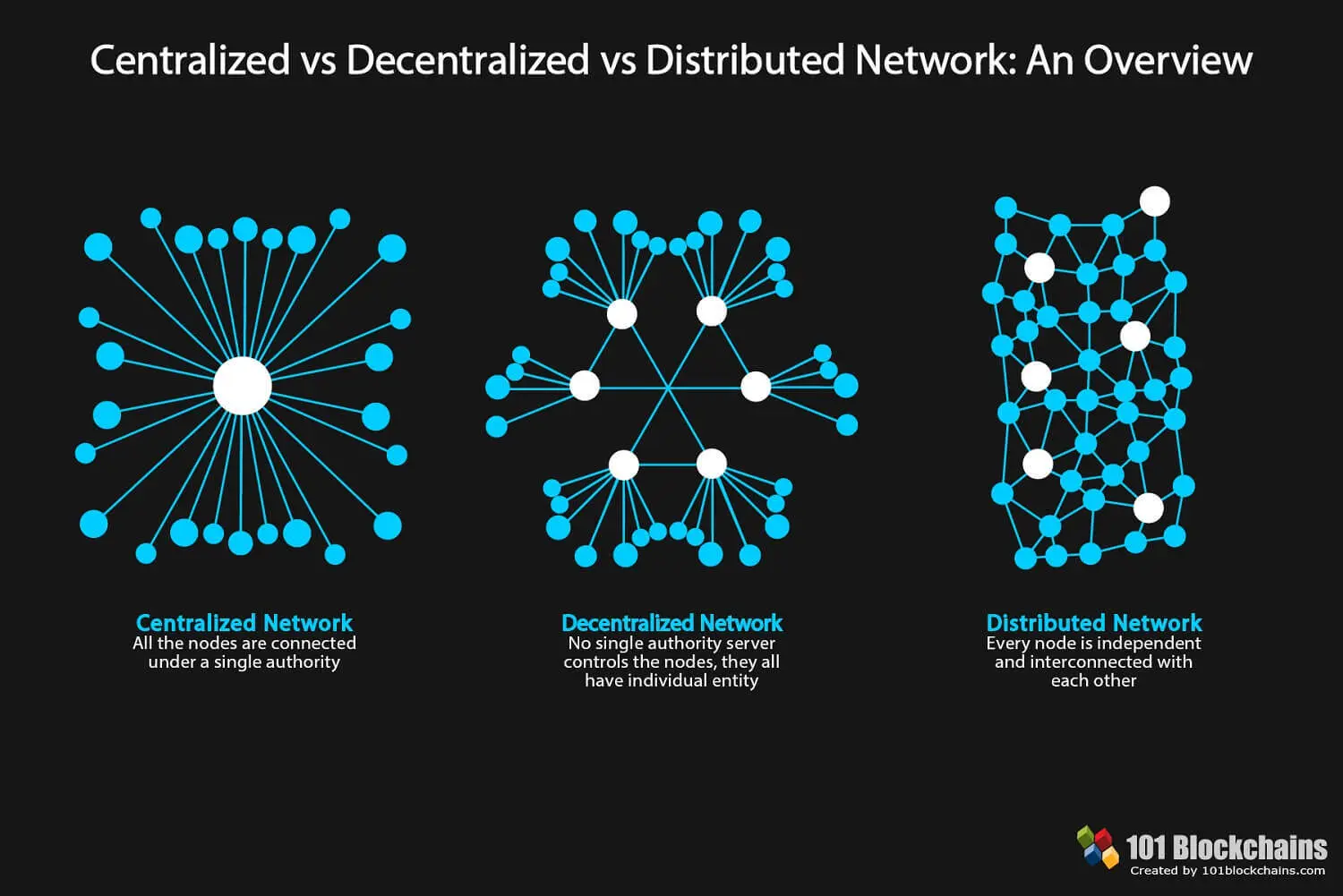
The distributed nature of blockchain is a cornerstone of its security model. Unlike traditional centralized databases, where all transactions are stored in one location, making them vulnerable to single points of failure and easier for hackers to compromise, blockchain operates on a peer-to-peer network. This distributed architecture means that data is spread across countless nodes, drastically enhancing security and system resilience. It becomes practically impossible for unauthorized parties to infiltrate or crash the entire system, making any attempt to tamper with data largely futile.
2. Enhanced Security and Immutability
Transactions executed via blockchain technology offer an exceptionally high level of security. This is primarily due to the unique cryptographic hash code embedded within each block. If a hacker attempts to tamper with a block’s digital information, its unique hash code will instantly change. This mutated hash code will then mismatch with the preceding block’s record, causing the tampered block to be immediately rejected by the network. Subsequently, the legitimate block is re-established through network consensus, rendering any hacker’s efforts ineffective and useless.
Technology is a two-edged sword, that brings disasters along with benefits!
3. Transparency and Accessibility
Blockchain is inherently transparent. For example, in supply chain management, every stage of a product’s journey—from manufacturing to distribution and sales—can be meticulously recorded on the blockchain. This provides a detailed, immutable history of the product, verifying its authenticity and original cost. The term “open ledger” signifies that the blockchain is user-friendly and readily viewable by anyone with physical access to the network.
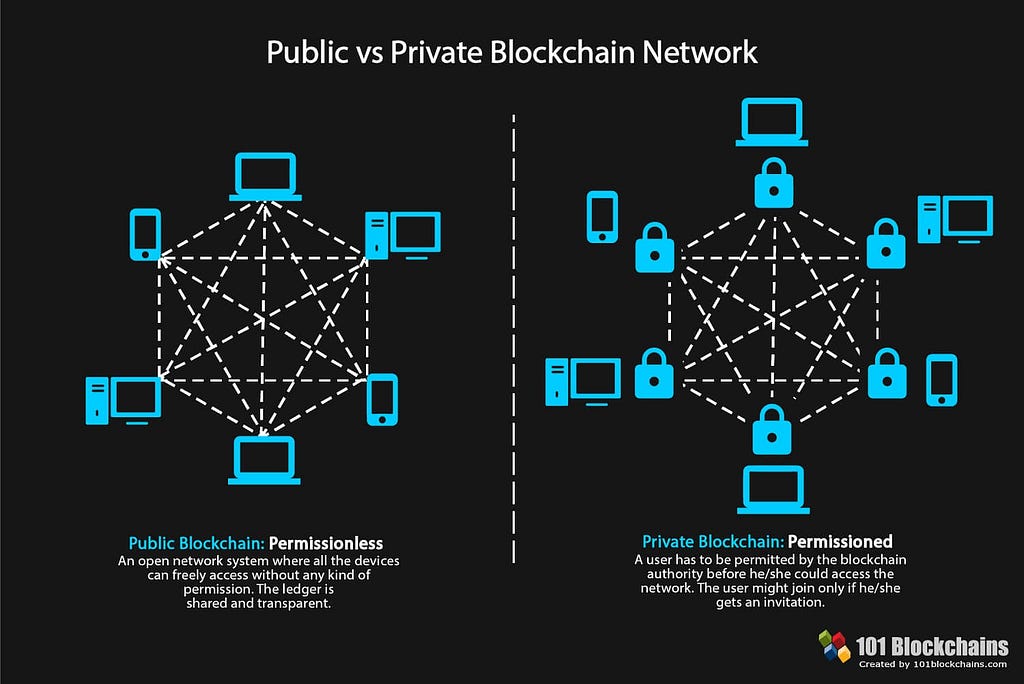
Furthermore, blockchain’s accessibility, or “permissionless” nature (in public blockchains), means that applications or products can be integrated into the network without requiring trust from other parties, as blockchain itself serves as the secure transport layer. Conversely, “permissioned” (private) blockchains employ an access control layer to regulate who can participate in the network. In such cases, a computer must be specifically connected to the private chain to access its blocks.
Key Applications of Blockchain Across Industries
Given its distinctive characteristics, blockchain technology boasts a wide array of applications across nearly all sectors. Here are some notable examples:
1. Supply Chain Management
The traditional method of moving products from manufacturer to consumer via retailers often involves inefficiencies and potential for price manipulation, where retailers might hike prices for profit. Blockchain technology offers a transformative solution by ensuring complete transparency. Every piece of data about a product, from its production timestamp to its sale, is recorded on the blockchain. This level of transparency dramatically reduces costs, minimizes errors, creates a single source of truth, and lessens the need for human intervention.
A real-world example of this is Walmart’s initiative to implement blockchain to connect and track all suppliers, purchasers, and delivery processes for its products across China, enhancing public trust and efficiency.
2. Enhancing Cybersecurity
In an era plagued by cybercrimes and cyberattacks, blockchain emerges as a powerful solution to secure transactions and bolster cybersecurity across various industries due to its inherent immutability. The benefits include superior security, decentralized data storage, expedited transactions, and reduced costs.
Mastercard, for instance, is actively developing blockchain solutions to facilitate seamless and secure transactions, enabling currency exchange without relying on a central authority.
3. Revolutionizing Voting Systems
Blockchain offers a compelling alternative to conventional electronic voting machines (EVMs), which can be susceptible to manipulation. Leveraging its distributed and transparent features, blockchain ensures the integrity and lawful execution of voting processes. Votes, recorded as digital blocks, are iteratively added to the chain, simplifying the counting process and guaranteeing accountability.
Australia’s MiVote platform exemplifies this application. MiVote is a token-based blockchain system that functions as a digital ballot box, safeguarding not only the integrity of individual votes but also the overall security of the election process.
Conclusion: Embracing the Future with Blockchain
The Science of Today is the Technology of Tomorrow!
In conclusion, it is evident that a multitude of revolutionary technologies are continuously evolving, progressively minimizing human effort. From drones combining the functions of pilots and cameramen to online marketplaces like Amazon and Flipkart disrupting traditional retail, the world is in a constant state of flux. To thrive in this rapidly upgrading global landscape, continuous learning, adaptation, and staying abreast of new modifications are not just advantageous, but essential for survival.
“Knowledge is Power” &“Information is Wealth”
References:
- https://101blockchains.com/ultimate-blockchain-technology-guide/
- www.wikipedia.com
- www.investopedia.com
- TEDx
