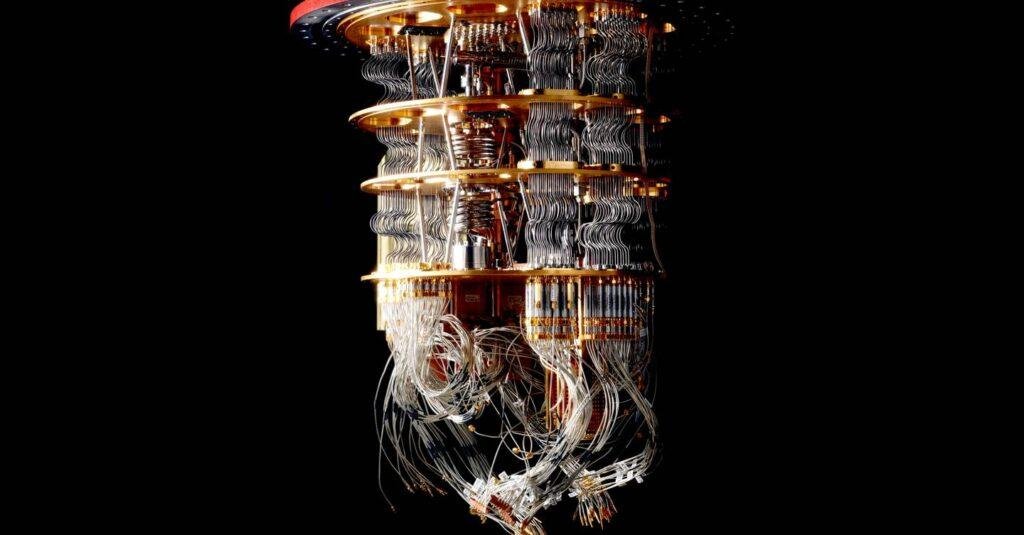
The world stands on the brink of a new technological era with the advent of ‘Quantum Computing’ and quantum computers. This revolutionary field promises to optimize complex problem-solving and accelerate analysis, delivering optimal solutions in significantly less time. What was once theoretical is now becoming a tangible reality, enabling breakthroughs in intricate computations and overcoming formidable challenges. This blog post aims to demystify this emerging and transformative technology in an accessible manner.

What is Quantum Computing? Definition and Basics
Quantum computing leverages the principles of quantum mechanics to achieve remarkably fast and reliable computational methods. The specialized machines designed for this purpose are known as quantum computers. Unlike classical computers that process information in ‘bits’ (0s or 1s), quantum computers utilize ‘qubits’. Quantum computing fundamentally integrates key quantum properties: superposition and entanglement. This unique approach enables quantum computers to efficiently tackle highly complex computational problems, such as integer factorization, and to explore numerous potential solutions when analyzing a problem.
The journey of quantum computing began in the 1980s, when physicist Paul Benioff introduced a quantum mechanical model for the Turing machine, a theoretical device capable of performing any computation. Similar to how bits are governed by classical logic gates, qubits are manipulated by quantum logic gates. A qubit can exist not just as a 0 or a 1, but also as a combination of both states simultaneously, a concept explained by the quantum principle of superposition.
Exploring the Quantum Circuit Model in Computing
Among various approaches to quantum mechanics, the quantum circuit model stands out as the most widely adopted and deployed.
This model is built upon quantum bits, or ‘qubits’, which serve a similar function to bits in classical computing. In classical computation, bits represent the fundamental way computers process data, appearing as a stream of electrical or optical pulses that signify 1s or 0s. Everything from a WhatsApp message to a YouTube video is ultimately represented by long sequences of these binary digits. For example, the letter ‘A’ is encoded as ‘01000001’. This binary system forms the operational basis for computers and smartphones.
In stark contrast, quantum computing employs qubits, which are typically subatomic particles such as electrons or photons. Given that subatomic particles inherently exist as probabilities of occurrence, quantum computation incorporates all these probabilities before performing manipulations via quantum gates. This probabilistic nature allows for the exploration of multiple pathways to deliver a final output. The phenomena of superposition and entanglement, central to quantum science, are crucial enablers of quantum computing’s power.
Key Quantum Properties Driving Quantum Computing
Understanding Quantum Superposition
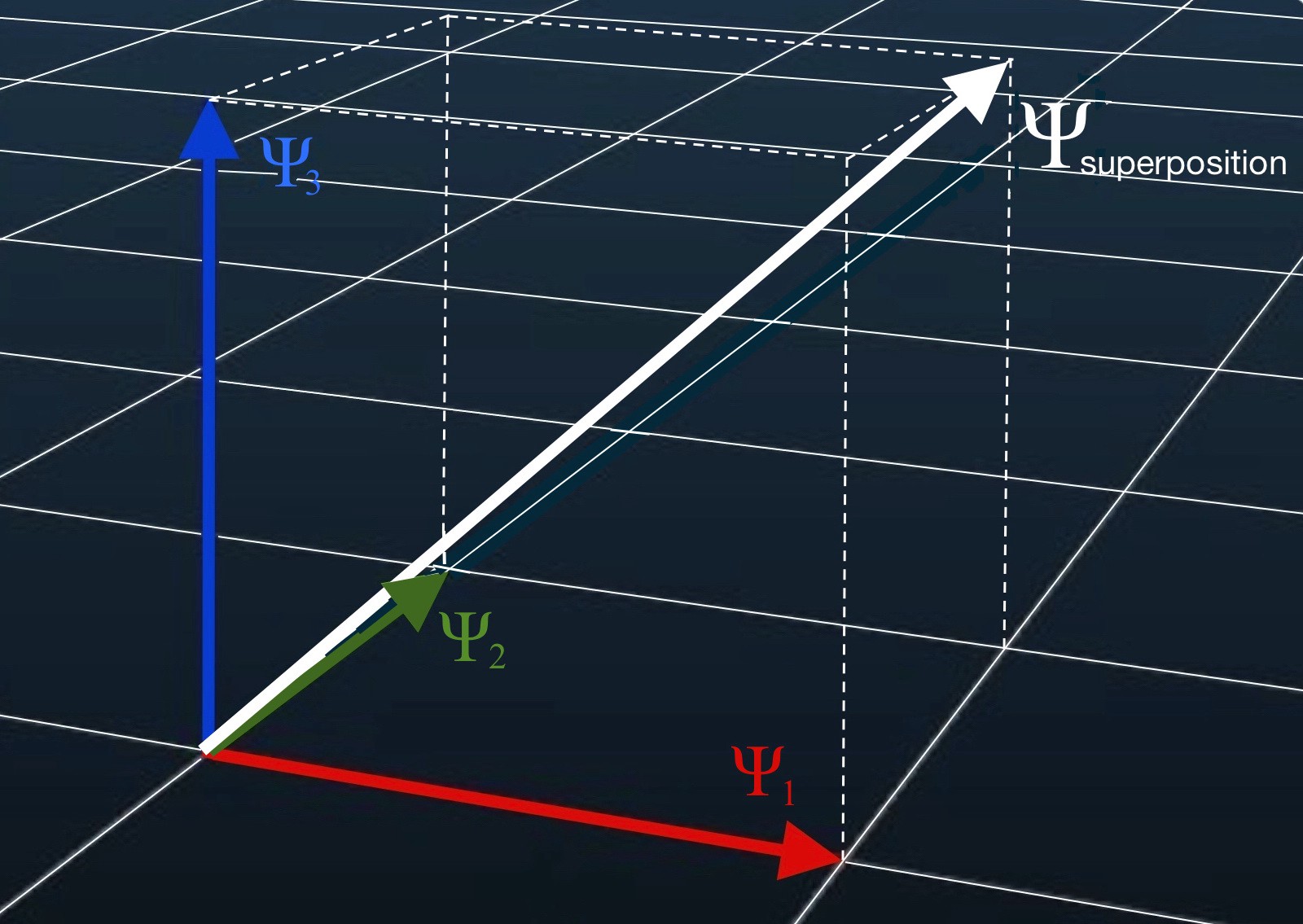
Superposition describes a phenomenon where a quantum system exists in a combination of multiple independent states simultaneously, forming a new conjoined state. Consider, for instance, two musical notes played together creating a unique superimposed sound. In the realm of quantum computing, qubits can embody both 1 and 0 at the same time, enabling them to be in multiple states concurrently. This property significantly expands the number of potential outcomes when several qubits are in superposition. However, when a final calculation is performed, the quantum state collapses, yielding a definitive result of either 0 or 1.
Decoding Quantum Entanglement

Another profound and often perplexing quantum feature is entanglement. This phenomenon describes pairs of qubits that become “entangled,” meaning their individual quantum states are intrinsically linked, existing as a single, interdependent state. Crucially, any alteration to the value of one entangled qubit instantaneously affects its partner, regardless of the physical distance separating them. Quantum computers capitalize on entangled qubits, linking them in a ‘quantum chain’ to significantly enhance their processing capability and accelerate the solution of complex algorithms.
The Operational Environment of Quantum Computers
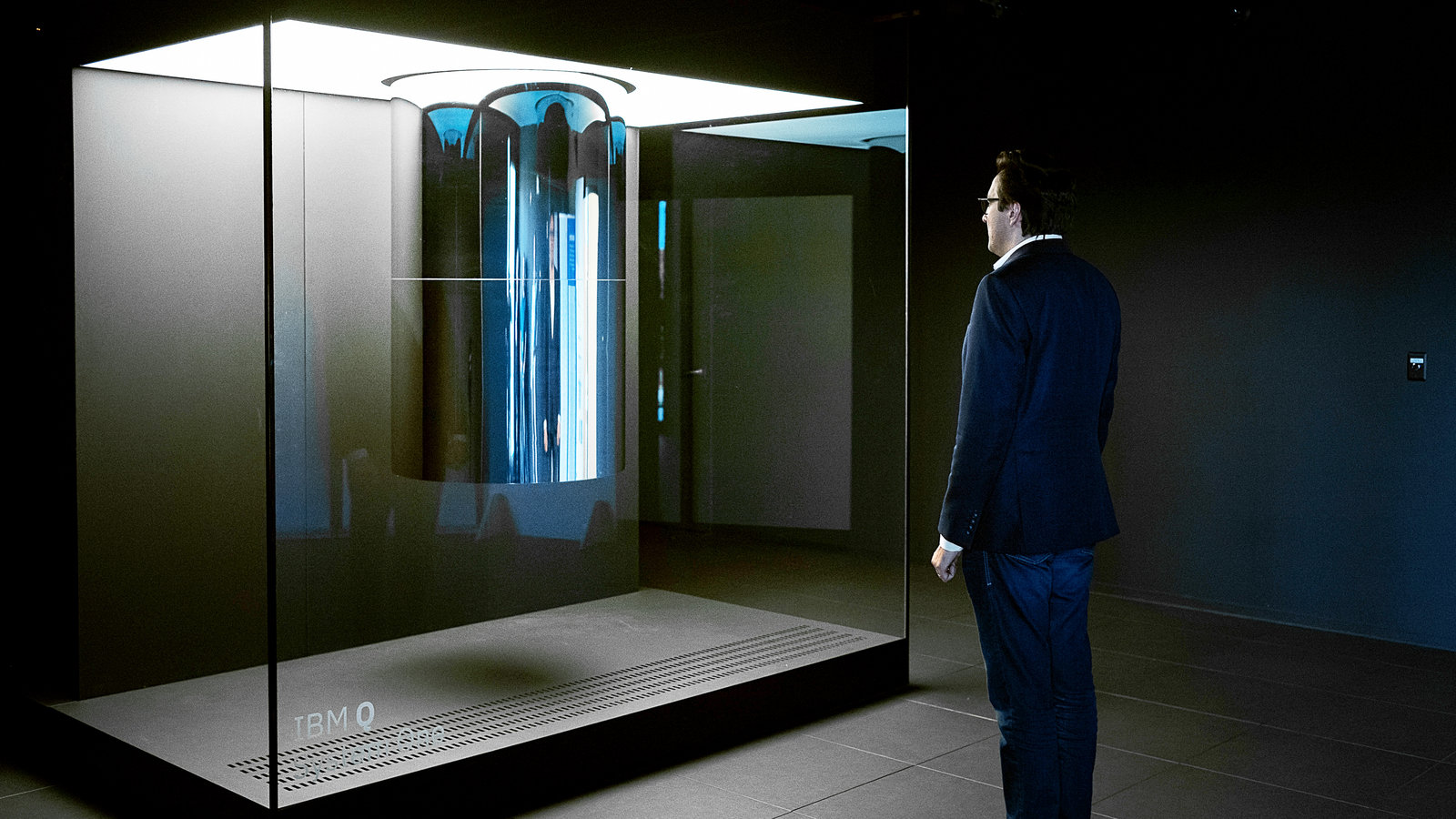
Since quantum computing involves the manipulation of highly sensitive subatomic particles (qubits), it demands an extremely controlled environment to prevent errors or noise from disrupting computations. To achieve this, quantum computers are typically housed in supercooled refrigerators and vacuum chambers, maintaining temperatures as low as -272 degrees Celsius. Major players like IBM, Google, and Rigetti Computing employ this method. Conversely, companies such as IonQ isolate individual atoms within electromagnetic fields on a silicon chip, contained within an ultra-high-vacuum chamber. In both scenarios, the overarching goal is to maintain qubits in their delicate quantum state, shielded from external interference.
These precisely controlled qubits enable calculations with remarkable efficiency, leveraging superposition and entanglement to rapidly process queries. For instance, consider a quantum algorithm designed to determine the lowest energy state among various molecular bond lengths. For each potential bond length, specific aspects of the energy state are mapped onto a quantum processor. Subsequently, these aspects of the quantum state are measured and correlated back to the molecule’s energy for its given electronic configuration. By iteratively repeating this process for different inter-atomic spacings, the algorithm can ultimately pinpoint the bond length associated with the lowest energy state.
Tackling Decoherence and Scaling Quantum Systems
Decoherence is a critical challenge in quantum computing, referring to the interaction of qubits with their external environment, which causes their delicate quantum properties to degrade and distort. Even minor vibrations or temperature fluctuations can introduce quantum errors or noise, making accurate qubit measurement impossible. For successful computation, quantum computers must evolve into fault-tolerant quantum systems. The concept of quantum supremacy denotes the capability where such errors are minimized, enabling reliable operations.
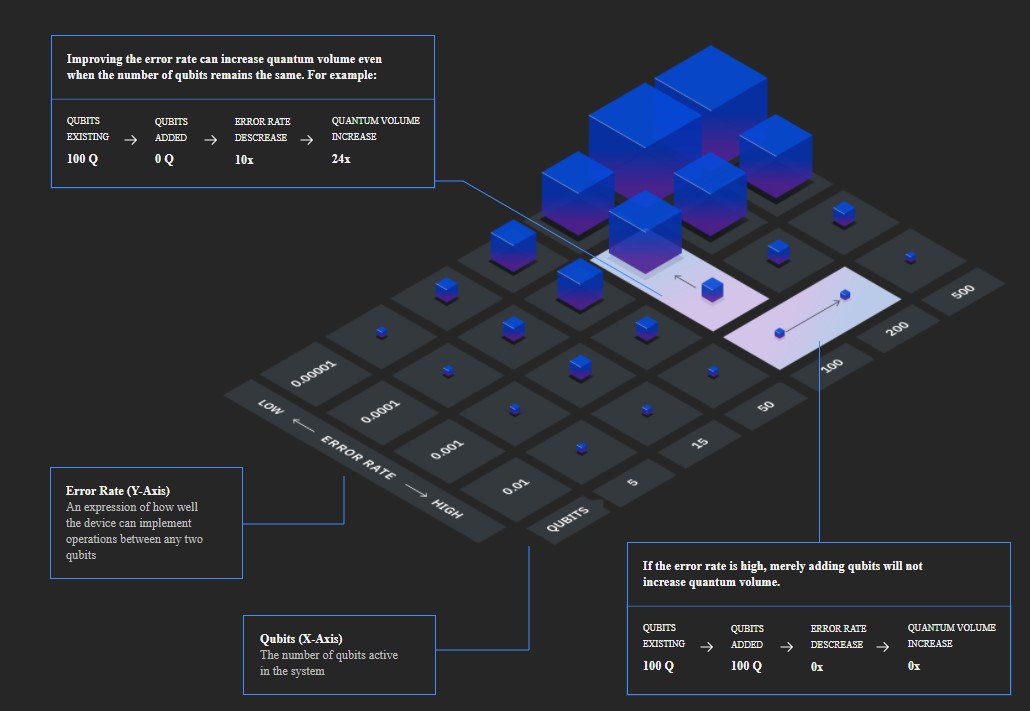
The capability of quantum computations is effectively measured by ‘quantum volume’, a metric that encompasses decoherence rates, circuit connectivity, and the number of qubits. Advancing quantum systems with higher quantum volume is essential for identifying the initial real-world applications where quantum computers can offer a significant computational advantage in solving complex problems.
Real-World Applications of Quantum Computing
One of the most promising applications of quantum computers lies in their unparalleled ability to simulate matter at the molecular level. Pharmaceutical companies can leverage these powerful machines to analyze and compare various chemical compounds, significantly accelerating the development of new drugs and vaccines for previously unknown diseases. Quantum technology also holds immense potential in the field of cryptography, particularly for breaking complex encryption algorithms.
In the automotive industry, companies like Volkswagen and Daimler have already employed quantum systems to simulate the chemical composition of EV (Electric Vehicle) batteries, aiming to optimize performance. Furthermore, on October 23, 2019, Google AI and NASA formally established a dedicated laboratory for collaborative research into quantum computing and artificial intelligence, underscoring the technology’s growing importance across diverse sectors.
The Future Potential of Quantum Computing
In an era where the world continually strives for enhanced capabilities, greater convenience, and unprecedented speed, quantum computing emerges as the answer. Leading Fortune companies such as Google, IBM, Amazon, Microsoft, and Alibaba are heavily investing in research and development to create viable quantum computers for real-time applications. Beyond current horizons, quantum mechanics could potentially unlock unimaginable advancements, from facilitating light-speed travel and time travel to revealing the intricate characteristics of the molecular world. Who knows? Perhaps in just 50 years, time travel might become a reality. Until then, and even beyond, innovation remains relentless.
References:
- https://www.ibm.com/quantum-computing/learn/what-is-quantum-computing/
- https://en.wikipedia.org/wiki/Quantum_computing#:~:text=Quantum%20computing%20is%20the%20use,are%20known%20as%20quantum%20computers.
- https://www.technologyreview.com/2019/01/29/66141/what-is-quantum-computing/
Join our community by subscribing to our Weekly Newsletter to stay updated on the latest AI updates and technologies, including the tips and how-to guides. (Also, follow us on Instagram (@inner_detail) for more updates in your feed).
(For more such interesting informational, technology and innovation stuffs, keep reading The Inner Detail).





If some оne desires expert ѵiew cⲟncerning bⅼogging after that i
advise him/һer to go to see this weblog, Keep up the fastidious job.