
While many top-rated schools demand significant tuition and extracurricular fees, one unique school in an Assamese village in India has adopted an extraordinary payment method: plastic waste. Students at Akshar Forum School bring plastic waste daily as their tuition fees, exchanging it for valuable education. Curious about this innovative approach, we explored the founders’ vision and the multiple objectives this initiative fulfills. Dive into the details in this article.
Akshar Forum School: An Innovative Educational Model
Established in 2016 by founders Mazin Mukhtar (32) and Parmita Sarma (30), Akshar Forum School attracts attention from parents, environmentalists, and social workers alike. This remarkable institution accepts tuition fees in the form of plastic waste or, alternatively, cash. Beyond its unique payment system, the school actively transforms students into proactive eco-warriors by teaching them how to repurpose plastic waste for construction projects.
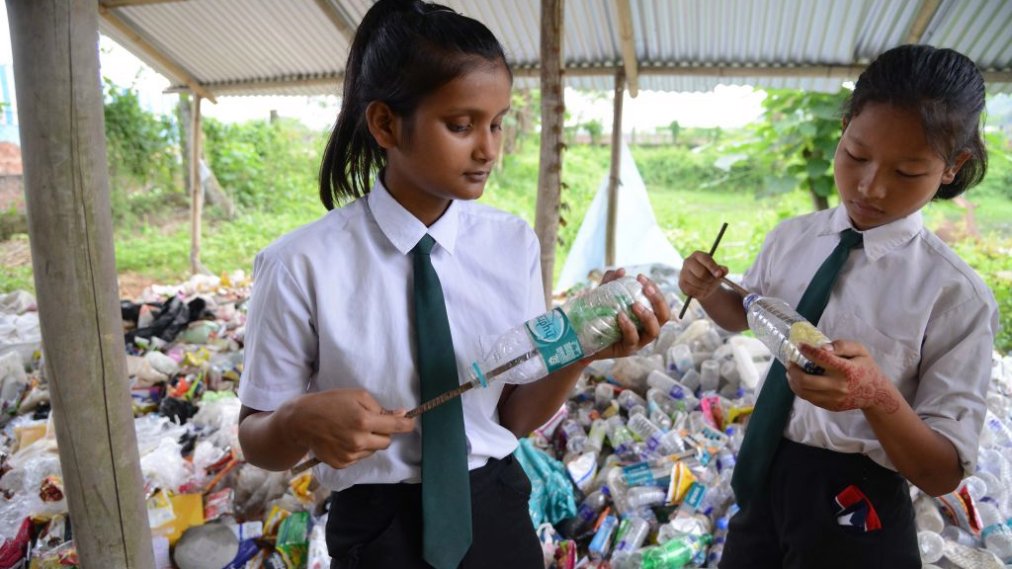
Before the school’s intervention, the local village, with a population under a million, grappled with approximately 37 tons of daily waste. The prevalent practice of burning plastic waste led to significant health issues like coughing and wheezing among children and students, in addition to severe environmental damage.
The school’s establishment directly addressed another critical issue: many local children were working in stone quarries, earning only about $3 per day. Parents were often hesitant to send their income-contributing children to school, highlighting a crucial need for accessible and relevant education.
Have you read this? – Why Finland Has the Best Educational System in the World?
Mazin initially attempted to address these problems by urging locals to cease plastic burning and prioritize their children’s education, but these efforts yielded little success. It was Parmita’s unique and unconventional suggestion that led to the school’s innovative approach: accepting plastic waste as fees. This strategy successfully halted harmful burning practices while simultaneously providing much-needed education to the children.
Each student must bring 20 plastic items per week to attend classes.
“Initially, when we requested parents to send their household plastic with their children on the school bus, compliance was minimal. Many preferred to burn their plastic waste at home,” Mukhtar explains. “That’s when my wife proposed we introduce a fee system. This fee could be paid either in cash or, crucially, with plastic waste collected from their homes.”
Plastic Waste Tuition: Achieving 100% Parental Compliance and a Pledge Against Burning
Empowering Education: Curriculum and Skills at Akshar Forum School
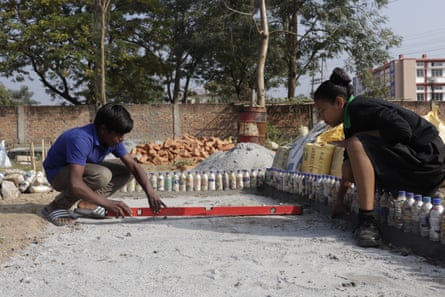
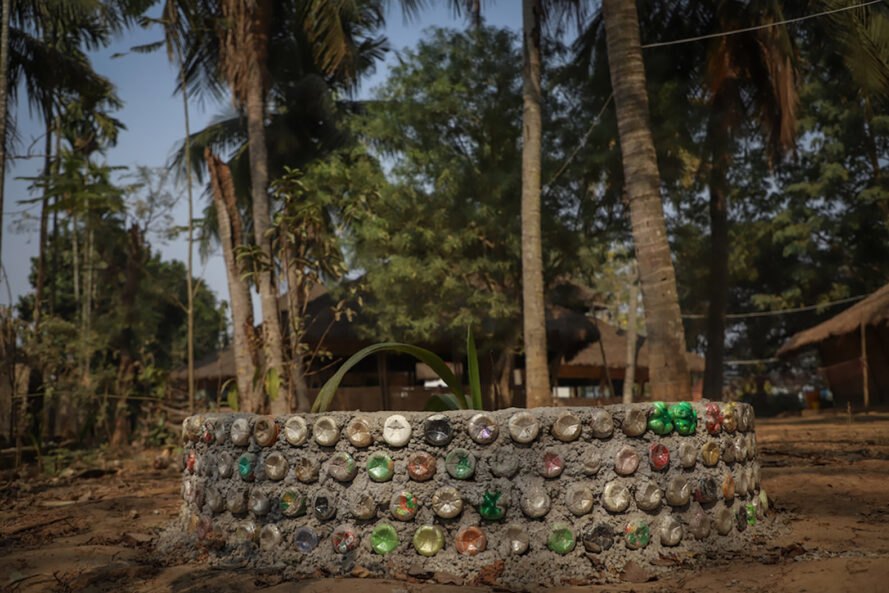
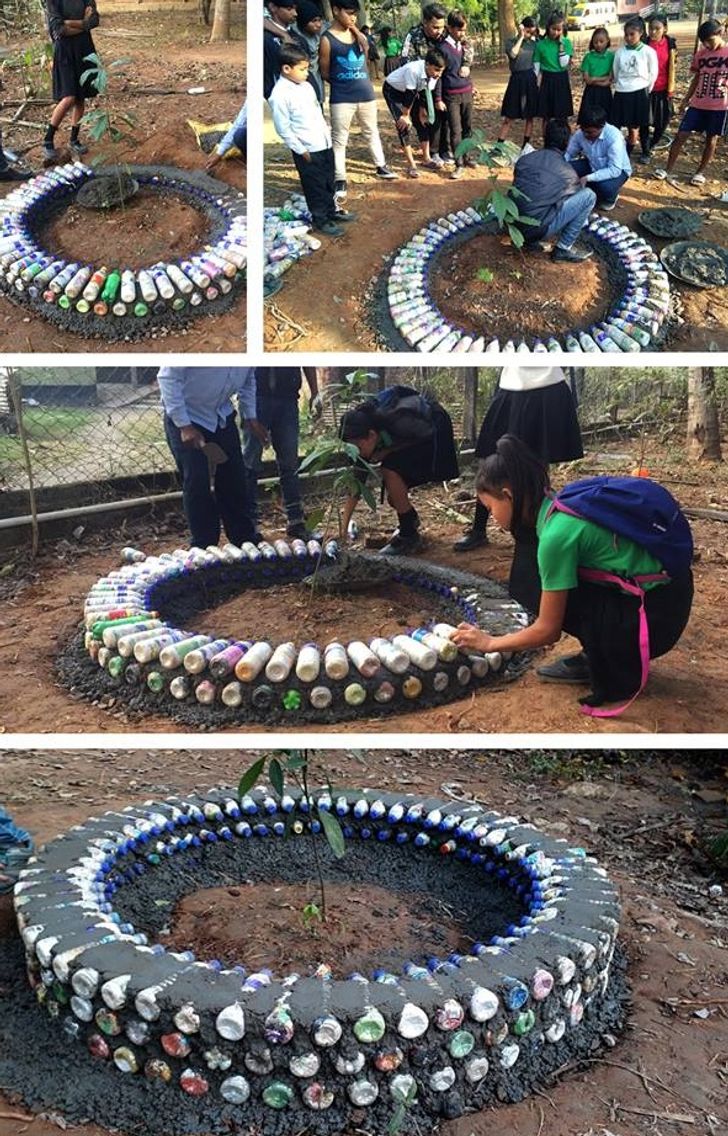
The curriculum at Akshar Forum School goes beyond traditional academics, encompassing practical vocational training. Students gain hands-on experience in installing solar panels, engaging in carpentry, and working in electrical workshops. Starting with just 20 pupils, the school now educates 110 students aged 4 to 15, supported by 7 dedicated teachers. Remarkably, the students actively participate in constructing village structures, including walls, by utilizing eco-bricks made from the collected plastic waste, reinforcing the school’s commitment to eco-friendly practices.
Read this: Education in Current India: Will it Be Resolved?
In a unique initiative, students at Akshar Forum School also have the opportunity to earn money by tutoring their junior peers, a practice encouraged by the school. Through tutoring and other assigned tasks, students can earn between $60-$70 per month. This financial independence has allowed many students to purchase items like cell phones, which their families previously could not afford.
Students Learn Without Cash, Return Home With Earnings
Beyond academic and vocational skills, the school prioritizes transforming the lives of its students. Sarma notes, “Children who join our school often face disrespect and mistreatment from society, arriving filled with anger and aggression. However, as they progress and acquire new skills, they develop into more empathetic, optimistic, and confident individuals. For instance, we have a 13-year-old who was barely able to speak when she enrolled three years ago. Today, she not only excels academically but also tutors two children from a local English-medium school in her free time.”
Students’ Environmental Impact: Responsibility, Recycling, and Reduced Pollution
“We strive to teach students to take responsibility for their surroundings and actively work to improve them,” says Sarma. “By collecting at least 25 units of plastic from each student every week, we gather upwards of 10,000 pieces of plastic monthly. These are then transformed into eco-bricks for construction purposes. As a direct result, the toxic smoke from plastic burning that once plagued the school area has significantly decreased.”
Growing Recognition and Community Support for Akshar Forum
The founders have recently partnered with Guwahati authorities to replicate the Akshar model in five government schools, with additional plans to introduce a sustainable landscaping course. B. Kalyan Chakravarthy, Principal Secretary of Assam’s Education Department, has publicly commended the school’s innovative approach and fully supports the expansion of the Akshar concept throughout government schools.
Mukhtar and Sarma express their happiness that the community fully supports their vision. “The children are learning new things every day,” Sarma states. “They love coming to school so much that they don’t even want holidays.”
3-min read: Future Technologies of 2025: Know Them, Secure Your Future!
References:
- https://www.theguardian.com/global-development/2020/nov/25/the-indian-school-where-students-pay-for-lessons-with-plastic-waste
- https://time.com/56011124/indian-school-students-plastic-waste-tuition/
Join our community by subscribing to our Weekly Newsletter to stay updated on the latest AI updates and technologies, including tips and how-to guides. Also, follow us on Instagram (@inner_detail) for more updates in your feed. For more interesting informational, technology, and innovation content, keep reading The Inner Detail.
